Doors and frames
Internal and suitable external doors, linings, frames and architraves.
Careful preparation for high-contact surfaces where sharp edges, smooth coats and the right product make a visible difference.
Woodwork is touched, cleaned and knocked more often than most walls. Existing coatings are checked for adhesion, defects are filled where suitable and the agreed system is built up for the required appearance and wear.

Internal and suitable external doors, linings, frames and architraves.
Skirting boards, dado rails, picture rails and other agreed decorative details.
Balustrades, spindles, strings and suitable handrail elements within the agreed scope.
Suitable timber windows, sills and related elements, subject to access and timber condition.
Check timber condition, joints, previous paint, knots and areas of frequent contact.
Clean, abrade, fill suitable defects and remove unsound coatings where needed.
Use compatible products for bare timber, adhesion and the selected finish system.
Apply the agreed sheen and explain the care needed while the coating cures.
Doors and windows may need to remain partly open between coats. Access, security, ventilation and curing time are considered when the sequence is planned, especially at contact points and frequently handled edges.
Woodwork is judged at edges, joints and touch points. The condition of the timber and old coating, the amount of handling and the preferred sheen all shape the specification.
Knots, exposed timber, loose layers, brittle filler and failed joints are identified before local repair and preparation are agreed.
Cleanability, handling, interior or exterior exposure and the visual sheen are considered together when selecting the coating.
Doors, windows and contact points may need controlled opening or handling while the coating continues to harden.
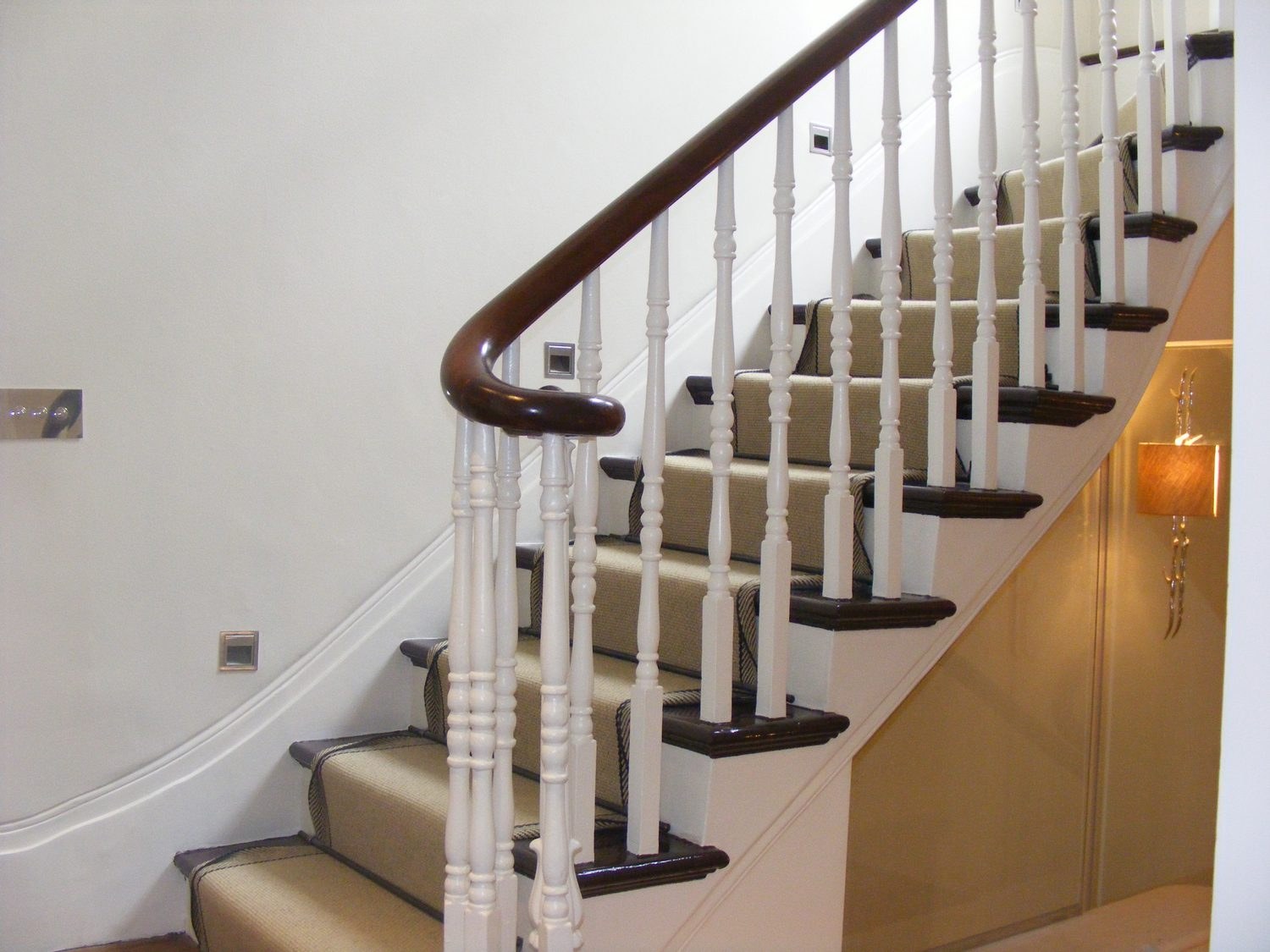
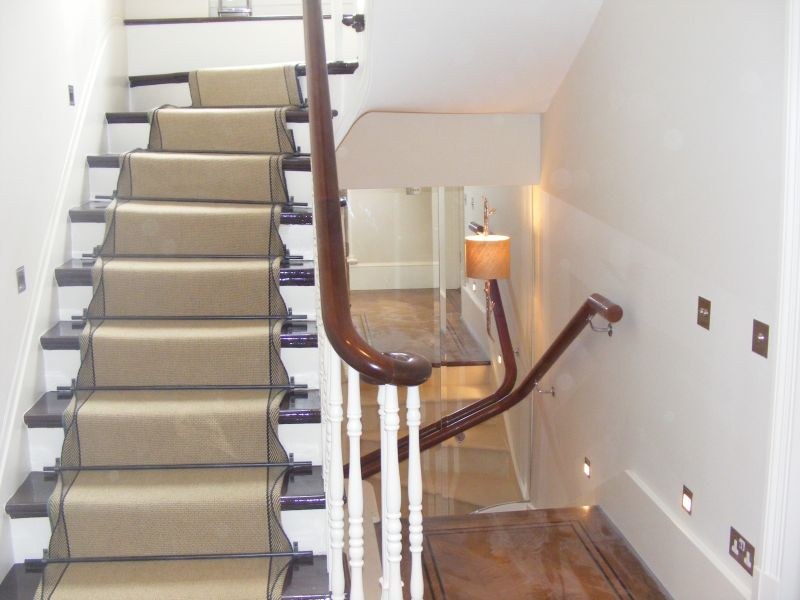
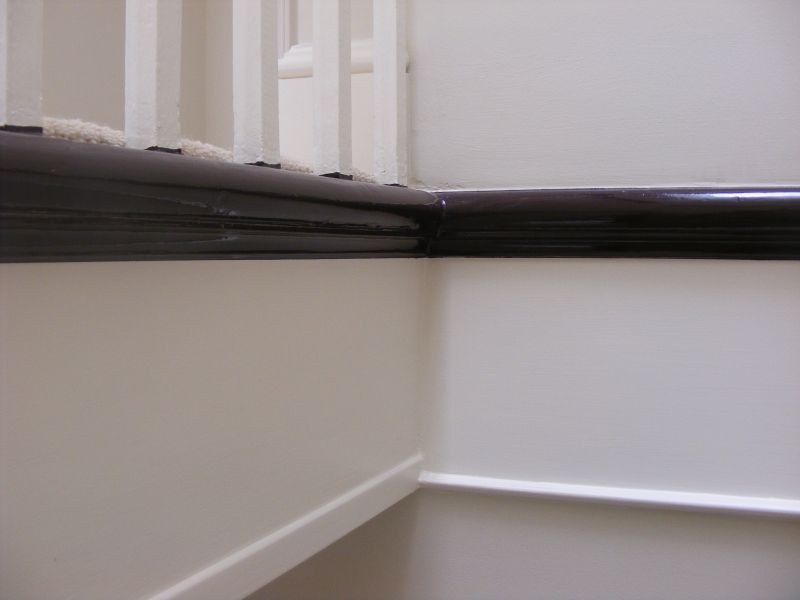
These genuine Decor Plast projects show staircase details, trim and adjoining painted surfaces.
The right approach depends on the timber, previous finish, daily use and whether every face and edge is included.
See general decorating FAQsOften yes, but strong colour changes can require extra preparation, primer and coats. The existing finish and timber condition need to be assessed first.
That depends on the coating. Touch-dry is not the same as fully cured, so freshly coated contact points should be treated carefully.
Suitable varnishing or staining can be discussed where the timber and existing coating make that approach practical.
Not always. The best approach depends on access, the edges being coated, drying space and the condition of the hinges and ironmongery.
Durability, cleanability and preferred sheen are considered together. The chosen primer and topcoat must also be compatible with the existing surface.
Small local repairs may be discussed, but extensive decay or failed joinery needs an appropriate repair or replacement before a lasting paint finish is possible.
Include the postcode and a count of the doors, windows or trim so the scale is clear from the first enquiry.
List each item, note interior or exterior exposure and add close-up photographs of peeling paint, joints and timber condition.